
A Journey of Strength, Independence, and Everyday Challenges
When people think about a wheelchair, they often see a limitation. But for millions of people around the world, a wheelchair is not a symbol of weakness—it's a symbol of freedom. It provides mobility, independence, and the ability to participate in everyday life. Yet despite this freedom, wheelchair users continue to face challenges that many people never notice.Imagine waking up every morning knowing that a simple trip to the grocery store, a visit to a friend, or even getting into a building might involve unexpected obstacles. For many wheelchair users, this isn't imagination—it's reality.
Every Day Starts with Planning
Most people can leave their homes without giving it much thought. They grab their keys, lock the door, and head out. A wheelchair user, however, often has to plan every detail.Is there a ramp at the entrance?Will the sidewalks be smooth enough to travel safely?Does the destination have an accessible restroom?Is public transportation wheelchair-friendly?These questions become part of everyday life, turning ordinary tasks into carefully planned journeys.
The World Isn't Always Built for Everyone
Although accessibility has improved in many places, there are still countless barriers. Broken sidewalks, narrow doorways, stairs without ramps, inaccessible public transport, and buildings without elevators can make moving around frustrating and exhausting.What seems like a small inconvenience to one person can completely prevent someone else from entering a building or reaching their destination.Accessibility isn't about giving special treatment—it's about giving everyone an equal opportunity to participate in society.
The Hidden Emotional Challenges
Physical barriers are only part of the experience. Living with limited accessibility can also affect emotional well-being.Many wheelchair users feel frustrated when they cannot access places others can enter freely. Some experience loneliness because social events or public spaces are difficult to navigate. Others become tired of constantly asking for assistance when simple design improvements could make them independent.Everyone deserves the dignity of making their own choices without unnecessary obstacles.
Breaking Stereotypes
One of the biggest misconceptions is that using a wheelchair means someone is incapable.In reality, wheelchair users are students, professionals, athletes, artists, parents, entrepreneurs, and leaders. They pursue careers, travel the world, compete in sports, and contribute to their communities every day.The wheelchair doesn't define the person. It is simply a mobility aid that helps them live their lives.
Small Changes Can Make a Big Difference
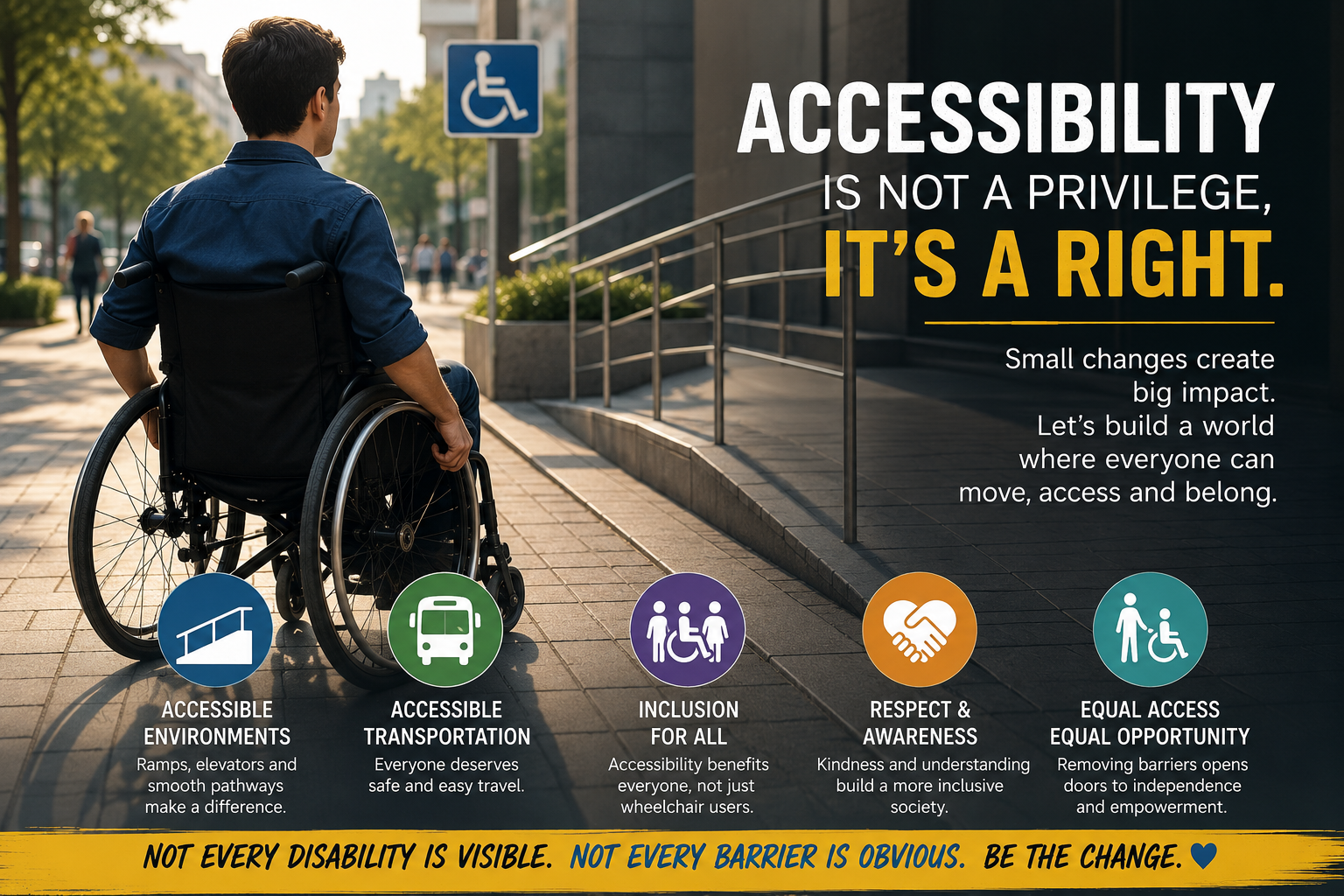
Creating a more inclusive world doesn't always require massive investments. Sometimes, the smallest improvements have the greatest impact.Installing ramps and elevators, maintaining smooth sidewalks, providing accessible public transportation, and designing inclusive buildings allow wheelchair users to move with confidence and independence.Equally important is changing attitudes. Speaking directly to wheelchair users, asking before offering help, and treating everyone with respect creates a more welcoming society for all.
A Future Built on Inclusion
Technology continues to improve mobility. Lightweight wheelchairs, electric power chairs, smart navigation apps, and accessible transportation services are making daily life easier than ever before.However, true inclusion isn't just about technology—it's about people. It means designing communities where accessibility is considered from the beginning instead of added as an afterthought.
Final Thoughts
Life in a wheelchair comes with unique challenges, but it is also filled with determination, resilience, ambition, and hope. Every accessible ramp, every inclusive workplace, and every act of understanding helps create a world where everyone has the opportunity to live independently.A wheelchair does not limit dreams. Barriers do.When we remove those barriers, we don't just improve the lives of wheelchair users—we create stronger, kinder, and more inclusive communities for everyone.
